Services
Root canal or extraction: how to know if your tooth can still be saved
Does it hurt to bite down, or is there an ache that won't quite go away? Here's when a root canal saves a tooth and when it has to come out, no fear tactics.

The short answer
As long as there's enough healthy tooth left and the bone holding it is in good shape, the first choice is usually to save it with a root canal. Extraction is reserved for teeth that can no longer be restored in a predictable way. Put simply: a well-treated natural tooth almost always works in your favour compared with any replacement.
That said, every mouth is different. This article is informational and doesn't replace a personalised clinical assessment. What you're feeling as "an ache" can have very different causes, and only an exam with an X-ray can tell them apart.
What a root canal is, and when it makes sense
Inside every tooth there's a soft tissue (the pulp) with nerves and blood vessels. When a deep cavity, a crack or a knock inflames or infects it, that tissue can no longer heal on its own. A root canal removes the damaged pulp, cleans and disinfects the canals, and seals them. The tooth stays in place; it simply stops hurting and stops being a source of infection.
It tends to be the right path when:
- There's enough tooth structure left to rebuild it afterwards.
- The surrounding bone and gum are healthy.
- The infection is localised and responds to treatment.
After a root canal, a crown or protective restoration is often recommended, since the tooth becomes more fragile. With that care, it can last many years.
When a tooth can't be saved
Sometimes pushing on isn't worth it, and extraction is the wiser call:
- A vertical fracture that runs below the gum and splits the root.
- Decay so extensive that there's barely any healthy tooth left to anchor a restoration.
- Significant bone loss around the root (from advanced gum disease).
- Recurring infections that don't respond even to a repeat root canal.
In these cases, hanging on to the tooth may prolong discomfort and infection without a stable result. Removing it in good time protects the bone and the neighbouring teeth.
Warning signs worth taking seriously
A tooth usually warns you before things get complicated. Pay attention if you notice:
- Spontaneous pain, or pain triggered by hot/cold that lingers.
- Discomfort when biting, or a feeling that the tooth sits "higher".
- A small bump or gum boil, sometimes with an odd taste.
- A change in colour of the tooth or swelling nearby.
One important point: pain going away doesn't mean the problem is solved. Sometimes the nerve simply "dies down" while the infection keeps advancing quietly. That's why it's worth checking even once it no longer hurts.
Why keeping your natural tooth matters
No replacement fully reproduces your own tooth. Keeping it preserves the root, which stimulates the bone and stops it from shrinking; it maintains your bite and the position of neighbouring teeth, which tend to drift once a gap appears; and, practically speaking, it usually means simpler treatment. If your tooth is viable, saving it is almost always the best long-term investment.
And if it has to come out, what's next?
An extraction isn't a dead end. Leaving the gap for a long time can cause trouble (teeth shifting, bone loss), so it's wise to plan the replacement:
- Dental implant: a titanium artificial root topped with a crown. A fixed solution that leaves the neighbouring teeth untouched.
- Bridge: a prosthetic that rests on the adjacent teeth to fill the space.
The right option depends on the available bone, the state of the neighbouring teeth and your own preferences. At Debod we walk you through it calmly before deciding anything.
About pain: what you can genuinely expect
This is the most common worry, and it's very well managed today. Both root canals and extractions are done with local anaesthetic, so you won't feel pain during the procedure. Afterwards, some mild soreness for a few days is normal and usually handled well with the guidance we give you. The image of the "dreadful" root canal belongs more to the past than to modern dentistry.
Take the first step in Argüelles
If a tooth is worrying you, it's best to look at it sooner rather than later: the earlier you act, the more options there are to keep it. At Debod, in the heart of Argüelles, we offer a first diagnostic visit included to assess your case and explain, with no pressure, whether your tooth can be saved or what the best alternative would be.
We're at C. de Ferraz, 24 (Ventura Rodríguez metro, L3). Call us on +34 914 47 62 25 or message us on WhatsApp at +34 689 10 47 14. Honest dentistry, at your own pace.
Frequently asked questions
Frequently asked questions about this topic.
Whenever the tooth is viable, saving it with a root canal is usually the first choice: you keep your natural root and the bone that supports it. An implant is an excellent solution when the tooth can no longer be saved predictably. The decision depends on an exam with an X-ray.
It's done with local anaesthetic, so you won't feel pain during the procedure. Afterwards there may be some mild soreness for a few days, usually well controlled with the team's guidance. Its painful reputation belongs mostly to the past.
Not necessarily in the way you'd hope. Sometimes the nerve becomes so inflamed that it stops responding and the pain fades, but the infection can keep advancing silently. It's worth having the tooth checked even if it no longer bothers you.
With a good restoration (often a crown) and normal care, a root-treated tooth can last many years. There are no absolute guarantees, but a well-treated natural tooth tends to give a very stable result.
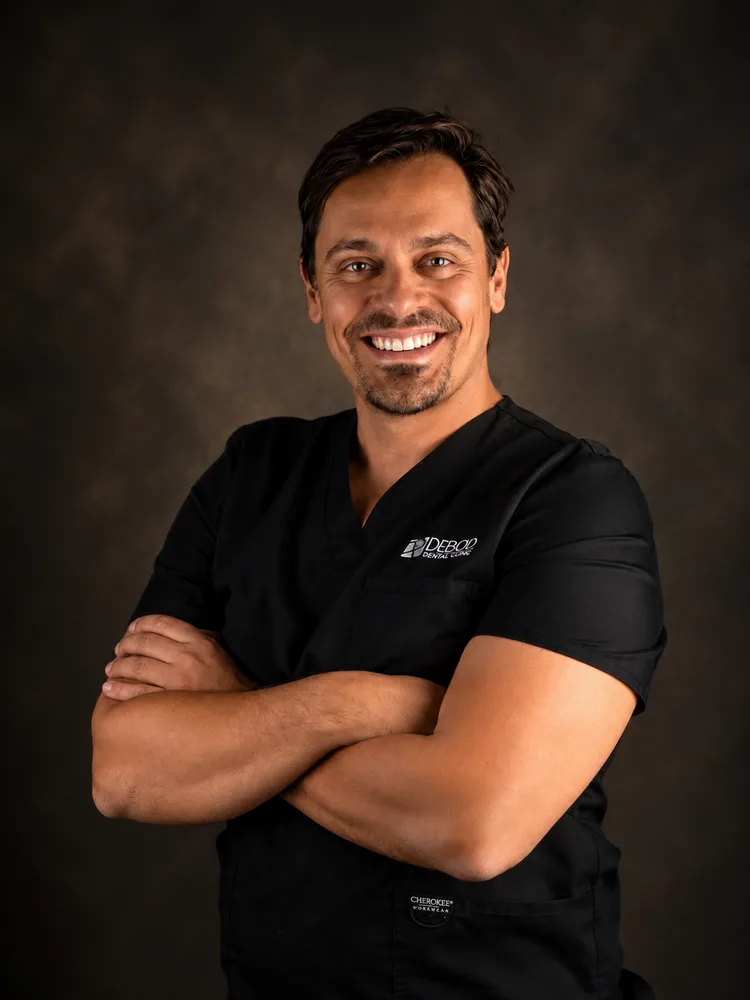
Reviewed by Dr. César Rodríguez
Prostodoncia · Rehabilitación Oral · COEM Reg. No. 28015194
Last reviewed: 28 June 2026
Informational content reviewed by a registered professional at Debod Dental Clinic. It does not replace a personalised clinical assessment. View specialist profile.
Author
Dr. César Rodríguez
Prosthodontics · Full Oral Rehabilitation
Dr. César Rodríguez is a distinguished prosthodontist with a Master's in Facial Prosthetics and Occlusion from the Complutense University of Madrid. Initially trained in Dentistry at the Central University of Venezuela, his credentials have…
Meet the team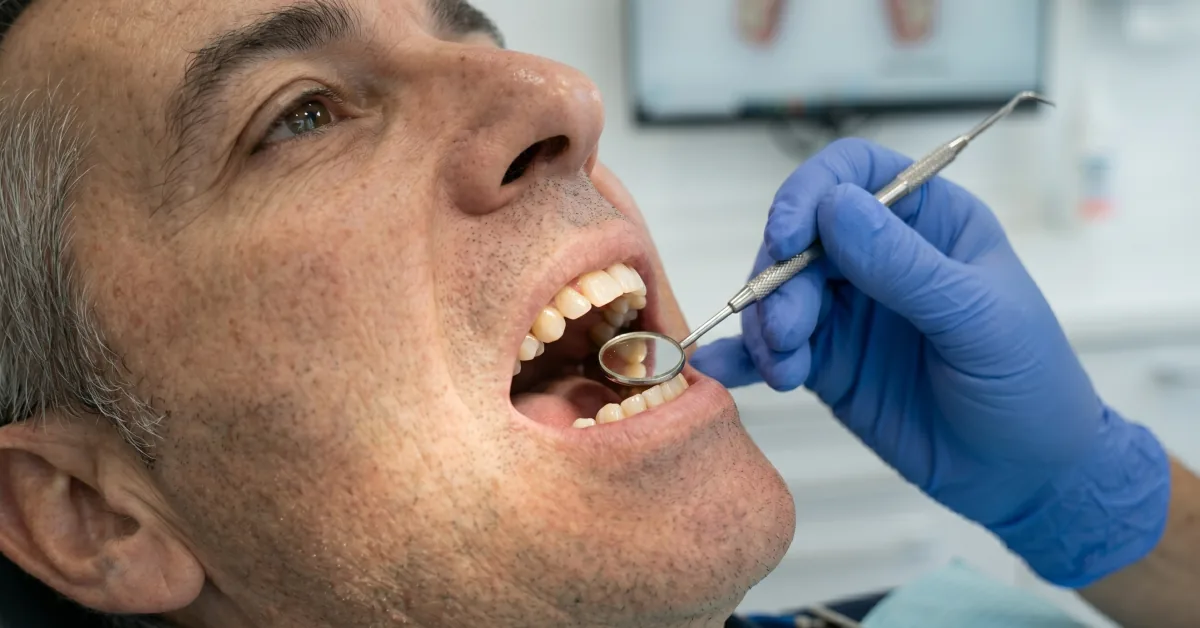
Did this article raise questions?
Talk directly with our team of specialists. First consultation with no obligation.
Book a consultation