Dental Health
Mouth ulcers: why they appear and when to see the dentist
Mouth ulcers are one of the most common oral complaints. Painful but generally harmless. We explain why they appear and when you should seek advice.
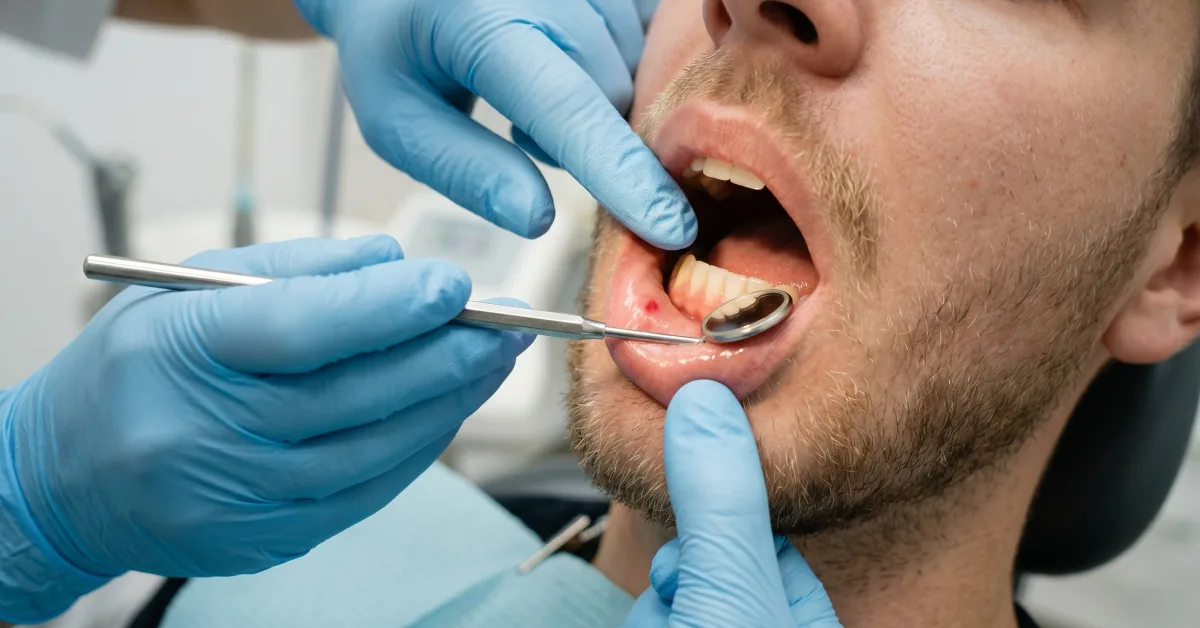
Mouth ulcers —also known as aphthous ulcers or "sores"— are small, painful ulcers that appear on the oral mucosa: the inside of the lips, the cheeks, the tongue or the soft palate.
They are one of the most common oral lesions: they are estimated to affect 20-30% of the population at some point in their lives.
Why do mouth ulcers appear?
The exact cause of recurrent mouth ulcers is not fully understood, but several triggering factors have been identified:
- Stress and anxiety: One of the most frequent triggers.
- Local trauma: Biting your lip, aggressive brushing, a crown that rubs.
- Hormonal changes: They are more frequent in women during the menstrual cycle.
- Nutritional deficiencies: Iron, folic acid, vitamin B12 or zinc.
- Irritant foods: Citrus, tomato, nuts, chocolate.
- Immune disorders: In some cases mouth ulcers are part of systemic diseases.
Types of mouth ulcers
Minor ulcers (80% of cases)
- Diameter under 10 mm
- Heal on their own within 7-14 days
- Leave no scar
Major ulcers (10% of cases)
- Diameter over 10 mm
- Take longer to heal (2-6 weeks)
- May leave a scar
Herpetiform ulcers (10% of cases)
- Multiple small ulcers that may merge
- Similar in appearance to herpes, but NOT caused by the herpes virus
Pain relief
There is no treatment that cures mouth ulcers, but there are ways to relieve the pain:
- Chlorhexidine rinses at 0.12%: Reduce the bacterial load and speed up healing.
- Topical anaesthetic gels: Relieve pain temporarily.
- Topical corticosteroids: For large or very painful ulcers.
- Vitamins: If there is a deficiency, supplementation can reduce recurrence.
When should you see the dentist?
Most mouth ulcers do not require a visit to the dentist and heal on their own. However, seek advice without delay if:
- The ulcer does not heal in more than 2-3 weeks
- They appear with an unusually high frequency
- They are very large (over 1 cm)
- They are accompanied by fever or general malaise
- They appear after starting a new medication
A sore that does not heal can be a sign of oral cancer, which requires urgent diagnosis.
Frequently asked questions
Frequently asked questions about this topic.
Most mouth ulcers (minor ulcers, 80% of cases) heal on their own within 7-14 days without scarring. If a sore does not heal within more than 2-3 weeks, you should see the dentist.
Chlorhexidine rinses, topical anaesthetic gels and, for large ulcers, topical corticosteroids all help. Avoid irritant foods (citrus, spicy food) while it heals.
Common mouth ulcers are neither contagious nor serious. However, a sore that does not heal can be a warning sign: that is why, if a sore persists, it is best to have an assessment to rule out other causes.
Reviewed by Dr. César Rodríguez
Prostodoncia · Rehabilitación Oral · COEM Reg. No. 28015194
Last reviewed: 18 March 2026
Informational content reviewed by a registered professional at Debod Dental Clinic. It does not replace a personalised clinical assessment. View specialist profile.

Author
Dr. César Rodríguez
Prosthodontics · Full Oral Rehabilitation
Dr. César Rodríguez is a distinguished prosthodontist with a Master's in Facial Prosthetics and Occlusion from the Complutense University of Madrid. Initially trained in Dentistry at the Central University of Venezuela, his credentials have…
Meet the team
Did this article raise questions?
Talk directly with our team of specialists. First consultation with no obligation.
Book a consultation