Dental Health
Deep dental cleaning in Argüelles, Madrid: when and why you need it
Not all cleanings are the same. A deep dental cleaning works beneath the gums to treat early periodontitis. We explain when and why you need it.
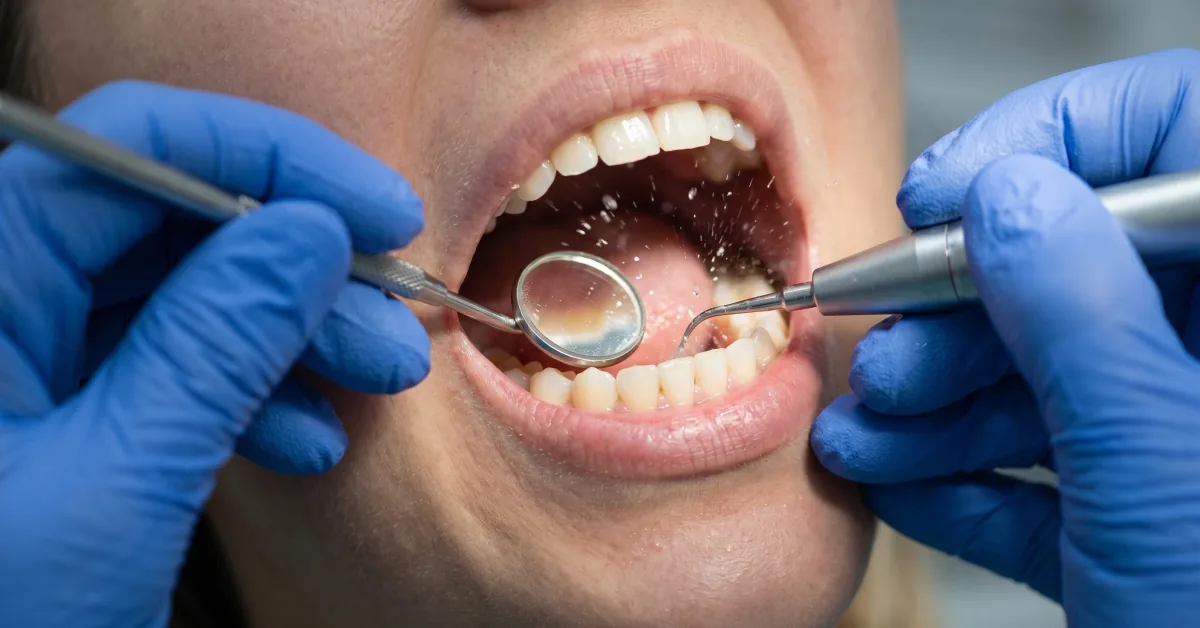
Many people confuse a standard dental cleaning (prophylaxis) with a deep dental cleaning (subgingival scaling). They are two different procedures with different goals.
The key difference
A standard cleaning works above the gum: it removes visible tartar and plaque. It is a preventive maintenance procedure.
A deep cleaning also works below the gum line, in the periodontal pockets where the bacteria responsible for periodontitis accumulate.
When do you need a deep cleaning?
Signs that may indicate it is needed:
- Bleeding gums when brushing or spontaneously
- Red, swollen gums or gums that pull away from the tooth
- Subgingival tartar visible on X-rays
- Periodontal pockets deeper than 4mm on probing
- Persistent bad breath despite proper hygiene
The process at Debod Dental Clinic
A deep cleaning is usually carried out over two sessions, treating half the mouth at each visit:
- Local anaesthetic optional for greater comfort.
- Subgingival ultrasonics: Ultrasonic instruments with a specific tip for working below the gum.
- Periodontal curettes: For precise root planing.
- Chlorhexidine irrigation: Disinfection of the pockets.
Does a deep cleaning hurt?
With appropriate local anaesthetic, the procedure is completely comfortable. There may be some sensitivity in the following days, which is easily managed with anti-inflammatories.
Results to expect
In the weeks following treatment, the gums:
- Regain a pink colour and a firmer appearance
- Bleed less or stop bleeding
- Move "closer" to the tooth (reduction of the pockets)
A periodontal re-evaluation is scheduled at 6-8 weeks to assess the response to treatment and decide whether any additional step is needed.
Frequently asked questions
Frequently asked questions about this topic.
A standard cleaning removes tartar above the gum line and is preventive. A deep cleaning (scaling and root planing) works below the gum, in the periodontal pockets, to treat periodontitis. They are different procedures with different goals.
It is carried out under local anaesthetic, so it is comfortable. Afterwards there may be some sensitivity for a few days, which is easily managed. It is far less uncomfortable than most people imagine.
It depends on your periodontal status. After the initial treatment a re-evaluation is scheduled and, if there is periodontitis, regular maintenance (often every 3-4 months) to keep the gums stable.
Reviewed by Dra. Mercedes López
Periodoncia e Implantes · COEM Reg. No. 28008795
Last reviewed: 20 February 2026
Informational content reviewed by a registered professional at Debod Dental Clinic. It does not replace a personalised clinical assessment. View specialist profile.

Author
Dra. Mercedes López
Periodontics and Dental Implants
Dr. Mercedes López is a specialist in periodontics and dental implants, two deeply interrelated disciplines: a healthy periodontal foundation is the essential prerequisite for any successful implant. With extensive experience in the diagnos…
Meet the team
Did this article raise questions?
Talk directly with our team of specialists. First consultation with no obligation.
Book a consultation