Cosmetic Dentistry
Zirconia Crowns: What They Are and When They're the Right Choice
A zirconia crown pairs strength, natural aesthetics and a metal-free design: here's what it is, when it makes sense and how long it can last with good care.
If you need to rebuild a badly damaged tooth or cap an implant, chances are you've come across zirconia. A zirconia crown is a cap that fully covers a tooth, made from zirconium oxide, a strong metal-free technical ceramic. It has become one of the most widely used options in modern dentistry precisely because it balances strength and aesthetics. Here's an honest look at what it is, when it makes sense and what to expect.
What a zirconia crown actually is
Zirconia (zirconium dioxide) is a dense ceramic material also used elsewhere in medicine thanks to its biocompatibility. In dentistry, it's shaped into crowns and bridges that restore a tooth's form, function and appearance.
Unlike older metal-porcelain crowns, zirconia has no metal core underneath. That removes the greyish line that sometimes appeared at the gum over the years and gives a cleaner, more uniform look.
Its main advantages
Zirconia stands out because it brings together three things that used to come separately:
- Natural aesthetics. Light passes through the ceramic in a way similar to natural enamel, so a well-matched crown in colour and shape can blend nicely with the rest of your smile.
- Strength. It's a tough material that handles chewing forces well, which makes it useful even for molars, the teeth that do the hardest work.
- Metal-free and biocompatible. With no metal involved, it's a comfortable choice for people who are sensitive to or wary of alloys, and gum tissue tends to respond well to it.
When zirconia is a good choice (and when to consider alternatives)
There's no single material that's "perfect for everything": the best choice depends on your specific case. That said, zirconia often fits well in situations like these:
- Molars or teeth that take heavy chewing loads.
- Crowns on implants, where a strong, metal-free material is welcome.
- Patients who prefer to avoid metal alloys.
- Restorations where aesthetics matter and a durable result is the goal.
On the other hand, in some very specific front-tooth cases where maximum translucency is the priority, another type of ceramic may be worth considering. There are also situations where a veneer or a filling is enough and a crown isn't needed at all. That's why the point isn't the "trendy" material, but a diagnosis that looks at your mouth as a whole.
How long they last and how to care for them
A well-planned, well-fitted zirconia crown can last many years with proper care. It isn't a guaranteed "forever": its lifespan depends on your hygiene, your habits and the tooth underneath.
To look after it:
- Brush twice a day and clean between your teeth daily.
- Keep regular check-ups to monitor the gum and the crown margin.
- If you clench or grind at night, a nightguard helps protect it.
- Avoid using your teeth as tools (opening packaging, biting hard objects).
What usually wears a crown down isn't the material itself, but neglect that affects the tooth or gum holding it in place.
The in-house lab advantage
A crown isn't just a piece of ceramic: it's precision work in colour, shape and fit. At Debod, in the heart of Argüelles, having our own lab lets us fine-tune those details with direct communication between the person treating you and the person crafting the crown. That makes it easier to match the shade to your neighbouring teeth, review the shape and adjust subtle nuances without long waits or middlemen.
This article is for information only and doesn't replace a personalised clinical assessment. Every tooth tells a different story, and only by seeing it can we tell you whether zirconia is your best option.
If a crown is on your mind, or you simply want to know how that tooth is doing, we'd be glad to welcome you for a first diagnostic visit included at Debod. You'll find us at C. de Ferraz, 24, Argüelles, 28008 Madrid (Ventura Rodríguez metro, L3). Call us on +34 914 47 62 25 or message us on WhatsApp at +34 689 10 47 14. We'll walk you through it calmly and with no obligation.
Frequently asked questions
Frequently asked questions about this topic.
They don't have to. Zirconia lets light through in a way similar to natural enamel, so when the colour and shape are carefully worked, the crown usually blends well with the rest of your smile.
With good care it can last many years. There's no guaranteed figure: its lifespan depends on your hygiene, your habits (such as clenching) and the condition of the tooth and gum supporting it.
It works for both. Its strength makes it especially useful for molars, which take heavy chewing loads, though in some specific front-tooth cases a more translucent ceramic may be considered.
The procedure is done with local anaesthetic, so you won't feel pain during treatment. Afterwards there may be mild, temporary sensitivity, which is usually easy to manage and fades within a short time.
Reviewed by Dr. César Rodríguez
Prostodoncia · Rehabilitación Oral · COEM Reg. No. 28015194
Last reviewed: 4 June 2026
Informational content reviewed by a registered professional at Debod Dental Clinic. It does not replace a personalised clinical assessment. View specialist profile.

Author
Dr. César Rodríguez
Prosthodontics · Full Oral Rehabilitation
Dr. César Rodríguez is a distinguished prosthodontist with a Master's in Facial Prosthetics and Occlusion from the Complutense University of Madrid. Initially trained in Dentistry at the Central University of Venezuela, his credentials have…
Meet the team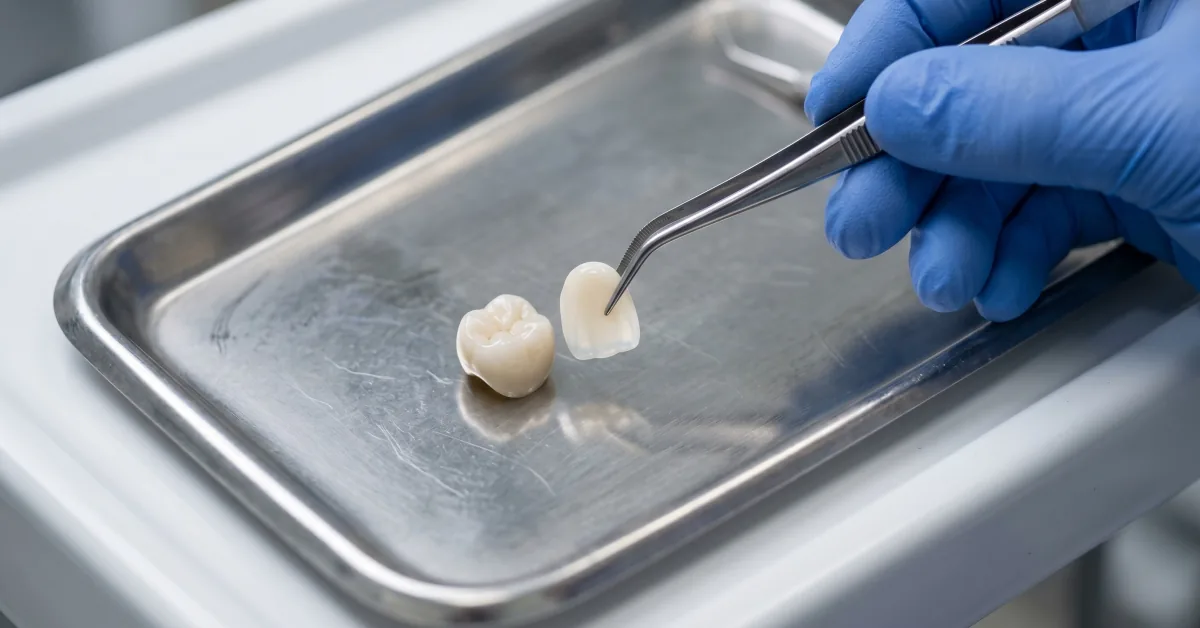
Did this article raise questions?
Talk directly with our team of specialists. First consultation with no obligation.
Book a consultation