Cosmetic Dentistry
Porcelain Veneers in Madrid: Honest Pricing & What to Expect
Wondering what porcelain veneers really cost in Madrid? Dr. César Rodríguez at Debod Dental Clinic gives you honest prices, candidacy criteria, and the step-by-step process.
What Does Porcelain Veneer Treatment Include at Debod Dental Clinic?
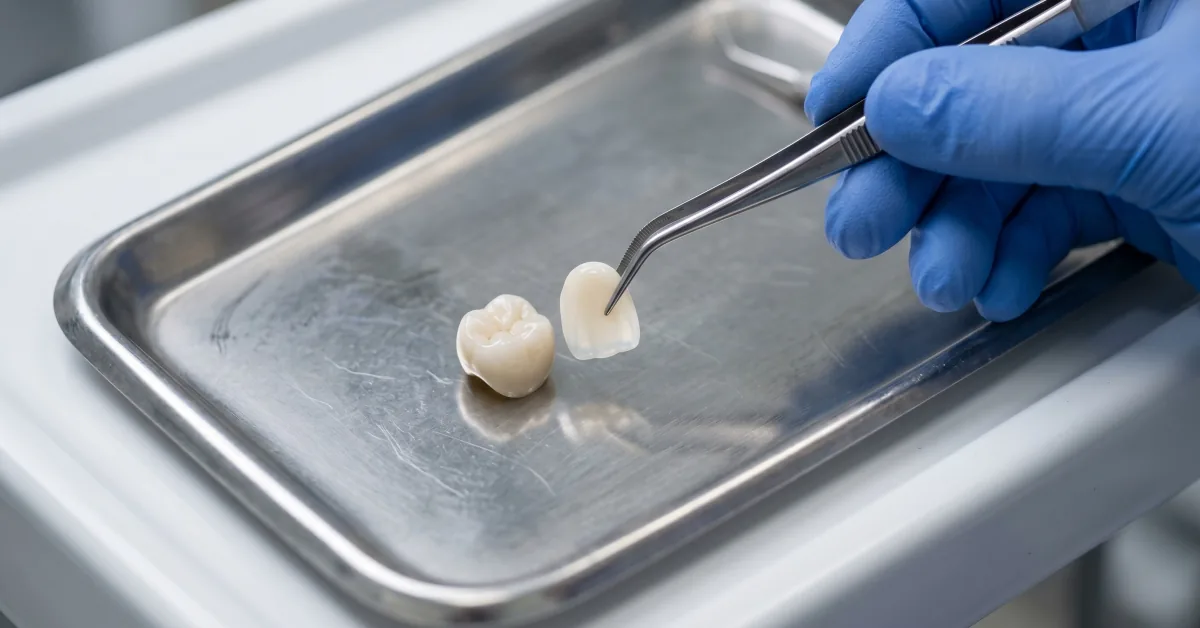
At Debod Dental Clinic in Argüelles, a porcelain veneer treatment is not simply a cosmetic procedure — it is a complete process designed around your smile, your bite, and your dental health. From the first diagnostic visit (included at no cost) through to the final fitting, every step is led by Dr. César Rodríguez, our specialist in Prosthodontics and Oral Rehabilitation, supported by our in-house digital laboratory, Debod Dental Lab.
What does that mean in practice? It means the ceramic restorations crafted for your teeth are made on-site, with direct communication between the ceramist and the clinician who places them. No outsourced lab. No surprises in colour or shape when the veneers arrive.
The treatment includes a digital intraoral scan, a diagnostic wax-up — a simulation of your future smile that you review and approve before any enamel is touched — provisional veneers during the fabrication period, and the final adhesive cementation. There is one thing about that wax-up process, and why it matters so much more than most patients realise, that I will come back to in the step-by-step section below.
How Much Do Porcelain Veneers Cost in Madrid? — Honest Pricing
This is the question I get asked most often. And the honest answer is: it depends on the case. But here is what the data looks like.
As a general orientation, porcelain veneers in Madrid typically range between 350 and 600 € per unit for feldspar ceramic, and between 500 and 900 € per unit for lithium disilicate (e.max) — the material we most commonly recommend at Debod for its balance between strength and natural translucency. A full smile treatment involving 10 to 12 veneers generally falls in the 5,000–10,000 € range, depending on case complexity, material chosen, and any preparatory treatment that may be needed first.
There is also the question of which material suits your specific situation — and it affects both the final look and how long the veneers last. I will come back to this in the step-by-step section, where the difference becomes much clearer in context.
What we will never do at Debod is give you a fixed price without having examined your teeth first. The exact figure is confirmed after your first diagnostic visit — included at no cost — with digital intraoral scanning and 3D imaging where clinically indicated. That visit is not a sales presentation. It is an honest clinical assessment.
If the investment feels significant, our financing options allow you to spread the cost up to 60 months, with 0% interest for the first 12 months and no deposit required.
One thing worth saying directly: if the only change you want is the shade of your teeth, whitening costs roughly ten times less and is completely reversible. I always explore that option first. If whitening alone will give you the result you are looking for, I will tell you — and save you the cost of veneers you do not need.
How Do I Know If I Am a Good Candidate?
Porcelain veneers are an excellent option for the right patient. But not every patient is the right patient, and at Debod we are honest about that.
You are likely a good candidate if you have intrinsic staining that does not respond to whitening (from tetracycline or fluorosis, for instance), small gaps between teeth, minor chips or surface wear, or shape irregularities such as unusually small or conical teeth. Veneers can address all of these with minimal tooth preparation.
There are situations, however, where we would ask you to wait — or to address something first.
Veneers cannot be placed on teeth with active decay, inflamed gums, or an uncorrected bite problem. Your gums need to be a healthy, firm coral-pink before we consider touching the enamel. Inflammation is a clinical signal that the foundation is not ready. And if your bite is placing uneven pressure on your front teeth, veneers placed without addressing that will be under mechanical stress from day one.
Patients who grind their teeth at night — bruxism — are not automatically excluded, but a night guard is a non-negotiable part of the treatment plan. Bruxism is the single leading cause of veneer failure, and we will not place restorations without protecting them.
One more thing I always say in consultation: healthy teeth have texture, translucency, and natural variation. If you show me a photo of a smile that looks like a row of identical white rectangles and ask me to reproduce it, I will suggest something that looks like your teeth — only better. Not a set of tiles.
The Process Step by Step at Debod
The first visit is diagnostic. We take an intraoral scan, review your bite, assess your gum health, and discuss what you want to achieve. You leave with a clear, honest picture of what is and is not possible.
If everything is healthy and we agree to proceed, the next session focuses on design. This is where the wax-up I mentioned earlier becomes so significant. At Debod Dental Lab, we create a digital simulation of your future smile — shape, length, shade — and you review it before a single tooth is prepared. You are effectively approving the finished result before the treatment becomes irreversible. If the edges could be slightly longer, the shade a touch warmer, the shape less square — adjustments happen here, at no extra cost.
Then comes preparation. For most patients this means a conservative reduction of the outer enamel — typically 0.3 to 0.5 mm. In some cases, depending on the starting position of the tooth, no preparation is needed at all. We take a new digital scan, and provisional veneers are placed while Debod Dental Lab fabricates the final restorations.
This is also where the material choice I mentioned in the pricing section becomes concrete. Lithium disilicate (e.max) is our default recommendation: it offers superior strength — 360 to 400 MPa — alongside genuine translucency that mimics natural enamel. Feldspar ceramic can be marginally more natural-looking in very thin applications, but requires more careful handling day to day. The right choice depends on your individual bite, habits, and starting tooth position, and is decided together at your consultation.
Two to three weeks later, the veneers return. We verify colour, fit, and bite carefully before bonding them with photopolymerisable resin cement. The whole process, from first visit to final fitting, typically takes three to five weeks.
You might be wondering what happens if something does not fit perfectly when the final veneers arrive — a colour that reads differently under natural light, or a contact point that needs refining. Because Debod Dental Lab is in-house, adjustments happen the same day. Not after another two-week external lab cycle.
Questions We Always Get Before Patients Book Their Appointment
Does getting porcelain veneers hurt?
The preparation is done under local anaesthetic, so you will not feel anything during the procedure. Some patients notice mild temperature sensitivity while wearing their provisional veneers — this settles on its own within a few days. By the time the final veneers are bonded in place, most patients report no discomfort at all.
How long do porcelain veneers last?
Properly placed and maintained, lithium disilicate veneers last 15 to 20 years on average. Feldspar ceramic sits closer to 10 to 15 years. These figures come from peer-reviewed research, not marketing materials. Actual longevity depends on your bite, your habits, and whether you keep up with your six-monthly check-ups — which include a professional dental cleaning to maintain the gum margin around each restoration.
What is the difference between a veneer and a dental crown?
A veneer covers only the visible front surface of the tooth, leaving most of the natural structure intact. A dental crown encases the entire tooth and requires significantly more preparation of the tooth structure. For purely aesthetic concerns on otherwise healthy teeth, a veneer is almost always the more conservative and preferable option.
Can porcelain veneers stain or change colour over time?
Porcelain is considerably more stain-resistant than composite or natural tooth enamel. Coffee, red wine, and tea will not penetrate a well-glazed ceramic surface. The bond line at the gum margin can accumulate some discolouration over many years — which is another reason why regular professional cleaning matters.
Is it worth getting veneers if I already have crowns or other restorations on adjacent teeth?
Yes, in most cases. The challenge is matching shades across different restorative materials. This is where having our in-house Debod Dental Lab is a genuine clinical advantage: the ceramist calibrates the veneer colour directly against the adjacent restoration, not from a shade guide alone.
Why Choose Debod Dental Clinic in Argüelles?
Debod Dental Lab is in-house. The ceramist who fabricates your veneers works in the same building as the clinician who designs and places them. Communication is direct. Adjustments happen in real time, not across a two-week external lab turnaround.
The diagnostic visit is included at no cost. You come in, we assess your case thoroughly with digital scanning and 3D imaging, and you leave with honest clinical information. No obligation. No pressure.
Dr. César Rodríguez holds a Master's degree in Facial Prosthetics and Occlusion from the Universidad Complutense de Madrid and continues to teach there. Porcelain veneers sit at the intersection of aesthetics and occlusion — both are his speciality. The clinic was recognised with the WhiteSmile Prize in 2023.
We are located at C. de Ferraz, 24, Argüelles, 28008 Madrid — a few minutes' walk from Ventura Rodríguez (Line 3), Plaza de España, and Argüelles metro stations. Open Monday to Friday, 9:00 to 20:00. International patients are seen in English.
If you are ready to take the first step, book your diagnostic visit today. No commitment. Just a clear, honest conversation about what your smile could look like.
Frequently asked questions
Frequently asked questions about this topic.
The preparation is done under local anaesthetic, so you will not feel anything during the procedure. Some patients notice mild temperature sensitivity while wearing their provisional veneers — this settles on its own within a few days. By the time the final veneers are bonded in place, most patients report no discomfort at all.
Lithium disilicate (e.max) veneers typically last 15 to 20 years when properly placed and maintained. Feldspar ceramic veneers sit closer to 10 to 15 years. Actual longevity depends on your bite, your habits, and whether you keep up with your six-monthly check-ups and professional cleanings.
A veneer covers only the visible front surface of the tooth, leaving most of the natural structure intact. A crown encases the entire tooth and requires significantly more preparation of the tooth structure. For purely aesthetic concerns on otherwise healthy teeth, a veneer is almost always the more conservative and preferable option.
Porcelain is considerably more stain-resistant than composite or natural enamel. Coffee, red wine, and tea will not penetrate a well-glazed ceramic surface. The bond line at the gum margin can accumulate some discolouration over many years — which is another reason why regular professional cleanings matter.
As a general guide, porcelain veneers in Madrid range from 350 to 600 € per unit for feldspar ceramic and from 500 to 900 € per unit for lithium disilicate (e.max). A full smile treatment of 10 to 12 veneers typically falls between 5,000 and 10,000 €. The exact price is confirmed after your first diagnostic visit, which is included at no cost at Debod Dental Clinic.
Reviewed by Dr. César Rodríguez
Prostodoncia · Rehabilitación Oral · COEM Reg. No. 28015194
Last reviewed: 7 August 2026
Informational content reviewed by a registered professional at Debod Dental Clinic. It does not replace a personalised clinical assessment. View specialist profile.
Author
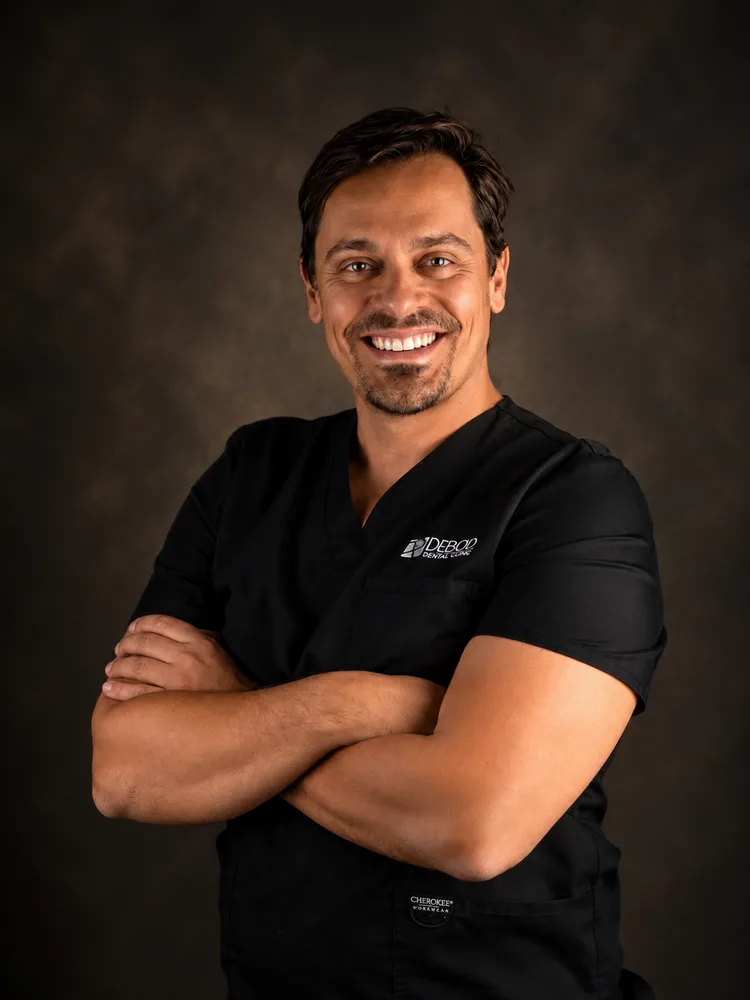
Dr. César Rodríguez
Prosthodontics · Full Oral Rehabilitation
Dr. César Rodríguez is a distinguished prosthodontist with a Master's in Facial Prosthetics and Occlusion from the Complutense University of Madrid. Initially trained in Dentistry at the Central University of Venezuela, his credentials have…
Meet the team
Did this article raise questions?
Talk directly with our team of specialists. First consultation with no obligation.
Book a consultation