Orthodontics
Invisalign with Severely Crowded Teeth: Is It Possible?
Severe crowding and Invisalign: does it actually work? Here is what really determines whether aligners are the right option for your bite.
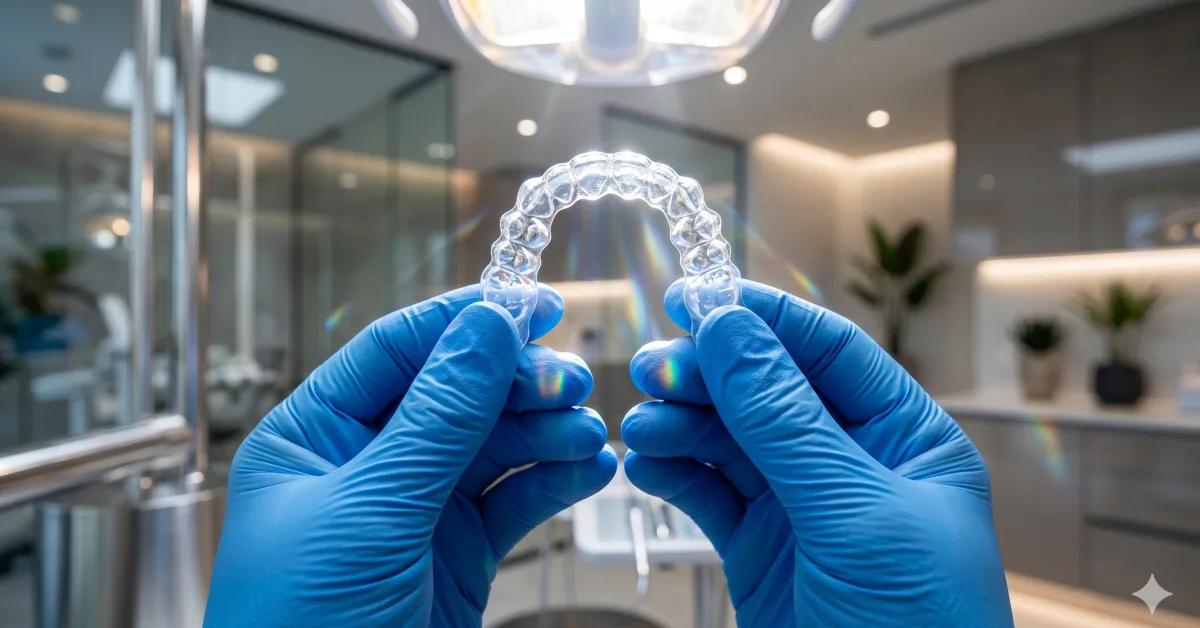
What Is Invisalign for Severe Crowding? — The Direct Answer
Yes, Invisalign can treat severe dental crowding in many cases, though it is not a guarantee for every mouth. At Debod Dental Clinic in Argüelles, Madrid, we assess each case with a 3D intraoral scan before confirming whether clear aligners alone will do the job, or whether they need to be combined with interproximal reduction, dental expansion, or in some cases extractions.
Crowding is measured by how much space is missing in the jaw compared to the size of the teeth. Mild crowding means 1–4mm short of space. Moderate is 5–9mm. Severe is anything over 10mm. That number matters more than it sounds — it is often the difference between a straightforward aligner case and one that needs a more involved plan.
Why Does This Matter for Your Dental Health?
Crowded teeth are not just a cosmetic concern. When teeth overlap, brushing and flossing become genuinely difficult — plaque hides in places your toothbrush cannot reach, and that raises the risk of decay and gum inflammation over the years. Severe crowding can also put uneven pressure on your bite, which some patients feel as jaw fatigue or premature wear on certain teeth.
Dr Víctor Guerrero, our specialist in orthodontics and dentofacial orthopaedics, sees this pattern often: "In my clinic, a lot of adults come in years after noticing their crowding got worse, not knowing it can shift gradually even into adulthood. Is it normal that crowding changes over time? Yes, particularly if wisdom teeth are pushing from behind or a retainer was never used after earlier treatment."
Correcting the alignment early — before decay or gum recession sets in — usually means a simpler, shorter treatment. Waiting does not make it easier.
Frequently Asked Questions
Can Invisalign really correct severe dental crowding?
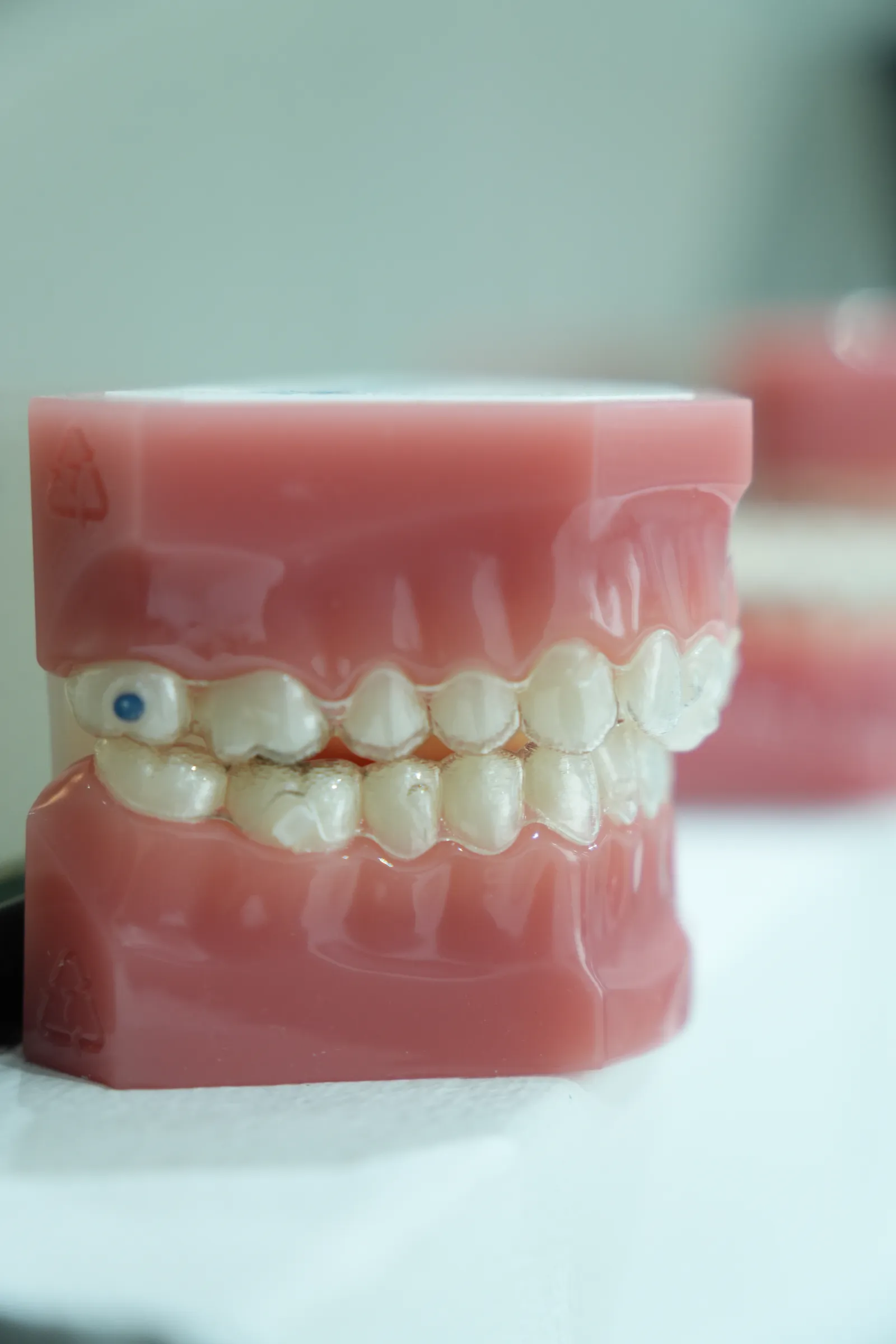
In many cases, yes. Align Technology's own data suggests that over 90% of malocclusion cases treated in specialised clinics, including moderate-to-severe crowding, can be managed with aligners — particularly when combined with interproximal reduction (IPR), dental expansion, and precision attachments. That said, severe rotations or ectopic (misplaced) teeth sometimes respond better to fixed braces. We only know for certain after a proper diagnostic scan.
Does Invisalign hurt more with severe crowding?
You will likely feel more pressure than with a mild case, especially during the first days of each new tray, since teeth may need to rotate or travel a longer distance. It is generally described as pressure or a dull ache rather than sharp pain, and it settles within a couple of days. If it does not, that is worth a check-up.
How much does Invisalign cost for severe crowding in Madrid?
It depends on the case — the number of aligners required, whether IPR, attachments, or extractions are needed, and whether refinement trays come into play later. Treating severe crowding involves more clinical steps than a simple case, so we always confirm the final figure after your diagnostic visit with a 3D scan, never before.
How long does treatment take?
Mild-to-moderate crowding often resolves in 6 to 12 months. Severe crowding, on the other hand, usually takes 18 to 30 months. Some patients ask if that timeframe can be shortened — realistically, wearing the aligners for the recommended 22 hours a day makes the biggest difference to staying on schedule.
Is it urgent to see a dentist for crowding?
Not an emergency on its own, but not something to put off indefinitely. Crowded teeth trap plaque more easily, and over years that can mean cavities between teeth or gum disease that is harder to reverse. If you notice bleeding gums, persistent bad breath, or a tooth that has visibly shifted, it is worth booking sooner.
Will I need teeth extracted for severe crowding?
Possibly, though not automatically. When the shortfall in space is greater than 8–10mm and IPR combined with careful expansion still is not enough, removing a premolar on each side can be the most predictable way to create room. This decision is never made lightly — it comes after reviewing your scans and models in detail.
What Should You Know Before Your First Visit?
- Bring any previous orthodontic records or retainers, even old ones — they help us understand how your bite has changed.
- Do not expect an exact price or timeline before the scan. Genuine alineadores invisibles planning depends on seeing your case in 3D first.
- If a previous consultation elsewhere proposed aligners for what looks like very severe crowding with barely any explanation of IPR or extractions, it is reasonable to ask more questions or seek a second opinion.
- Wearing discipline matters more than people expect — aligners only work while they are in your mouth, roughly 22 hours a day.
At your first visit, we take a full intraoral 3D scan and, where needed, imaging to assess root position and jaw relationship. This is also the moment to ask us anything — is Invisalign really worth it for your particular case, or would a hybrid approach with fixed appliances for part of the treatment be more predictable? We would rather have that conversation honestly upfront than adjust expectations later.
When Is It Urgent to See a Dentist?
Severe crowding rarely needs same-day attention on its own, but certain signs do. If a tooth has moved noticeably in recent months, if your gums bleed when brushing around the crowded area, or if you feel persistent discomfort when biting down, these are reasons to come in soon rather than wait for a routine check-up. Crowding can also make it harder to spot early decay between teeth, so if it has been over six months since your last limpieza dental, that is worth catching up on too.
Why Choose Debod Dental Clinic?
Every Invisalign case at Debod Dental Clinic starts with digital planning — an intraoral scan and, where needed, a 3D CT scan — so you see a realistic simulation before committing to anything. Our in-house laboratory, Debod Dental Lab, works directly with Dr Víctor Guerrero on refinements when a case needs adjusting mid-treatment, which keeps turnaround fast and precise.
The first diagnostic visit is included, with no obligation attached. If your crowding turns out to need a combined approach — perhaps starting with limited fixed appliances before finishing in aligners — we will explain exactly why, and what the alternative would mean for your results. We also offer financing up to 60 months with 0% interest for the first 12, so treatment length does not have to be a barrier to starting properly.
If you have been wondering whether your own crowding is treatable with Invisalign, the only reliable way to know is a proper look at your teeth in 3D. Book an appointment with us in Argüelles, Madrid, and we will tell you honestly what we see — and what we would do about it.
Frequently asked questions
Frequently asked questions about this topic.
In many cases, yes. Modern Invisalign technology (ClinCheck, SmartForce, attachments) has widened what aligners can treat, and combined with interproximal reduction (IPR) or, in some cases, tooth extraction, it can resolve crowding beyond 10mm. It always depends on an individual assessment though — some root positions or rotations respond better to fixed braces.
You may feel more pressure in the first few days of each new aligner, especially when teeth are being rotated or moved a longer distance. It is not normally described as painful, more a dull ache that settles within 48 hours. If discomfort is sharp or lasts longer, come and see us.
It depends on the case — the number of aligners needed, whether IPR or extractions are required, and whether refinement trays are involved. We only confirm an exact figure after a 3D scan and full diagnosis at your first visit, which is included.
Moderate crowding can resolve in 6–12 months. Severe crowding (over 10mm of discrepancy) usually takes 18–30 months, sometimes with a hybrid approach combining fixed appliances and aligners for the most complex movements.
Not an emergency in the traditional sense, but it is not something to leave indefinitely either. Severely crowded teeth are harder to clean properly, which raises the risk of decay and gum disease over time. If you also have pain, bleeding gums or a tooth that has shifted suddenly, book an appointment sooner rather than later.
Possibly. When the discrepancy is greater than 8–10mm and IPR plus dental expansion cannot create enough space, removing a premolar (usually one on each side) may be the most predictable route. This is decided case by case, never assumed in advance.
Reviewed by Dr. Víctor Guerrero
Ortodoncia · Ortopedia Dentofacial · COEM Reg. No. 28013382
Last reviewed: 26 August 2026
Informational content reviewed by a registered professional at Debod Dental Clinic. It does not replace a personalised clinical assessment. View specialist profile.
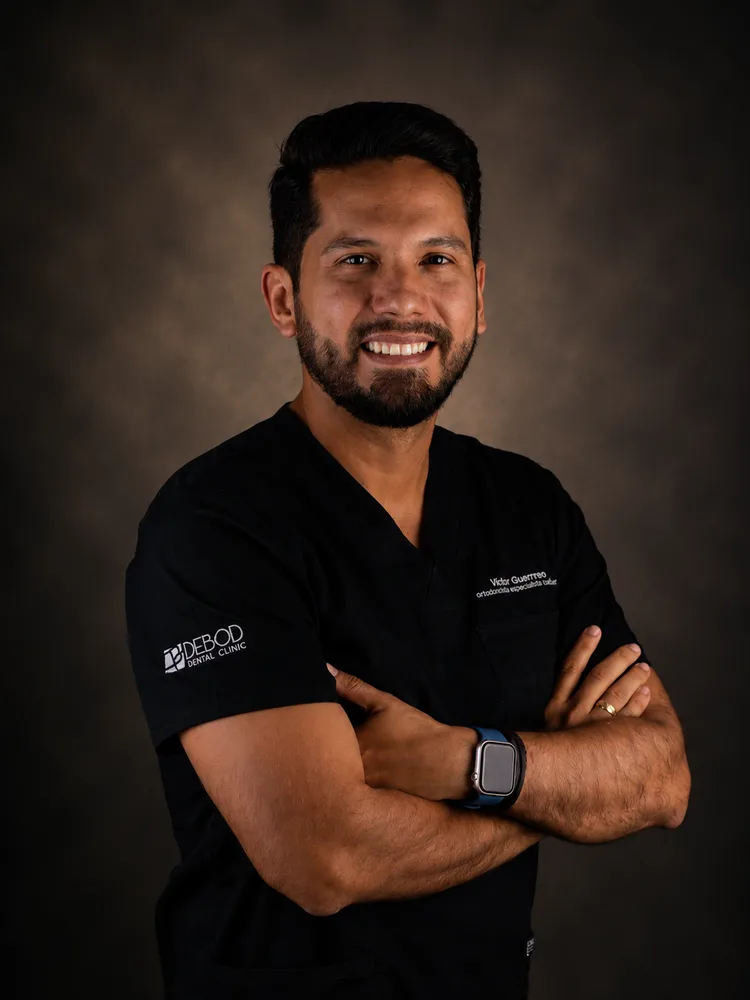
Author
Dr. Víctor Guerrero
Orthodontics · Dentofacial Orthopaedics
Dr. Víctor Guerrero is a leading specialist in orthodontics and dentofacial orthopaedics, recognised for his contributions to the fields of invisible orthodontics and skeletal anchorage. A graduate with honours in Dentistry and Orthodontics…
Meet the team
Did this article raise questions?
Talk directly with our team of specialists. First consultation with no obligation.
Book a consultation